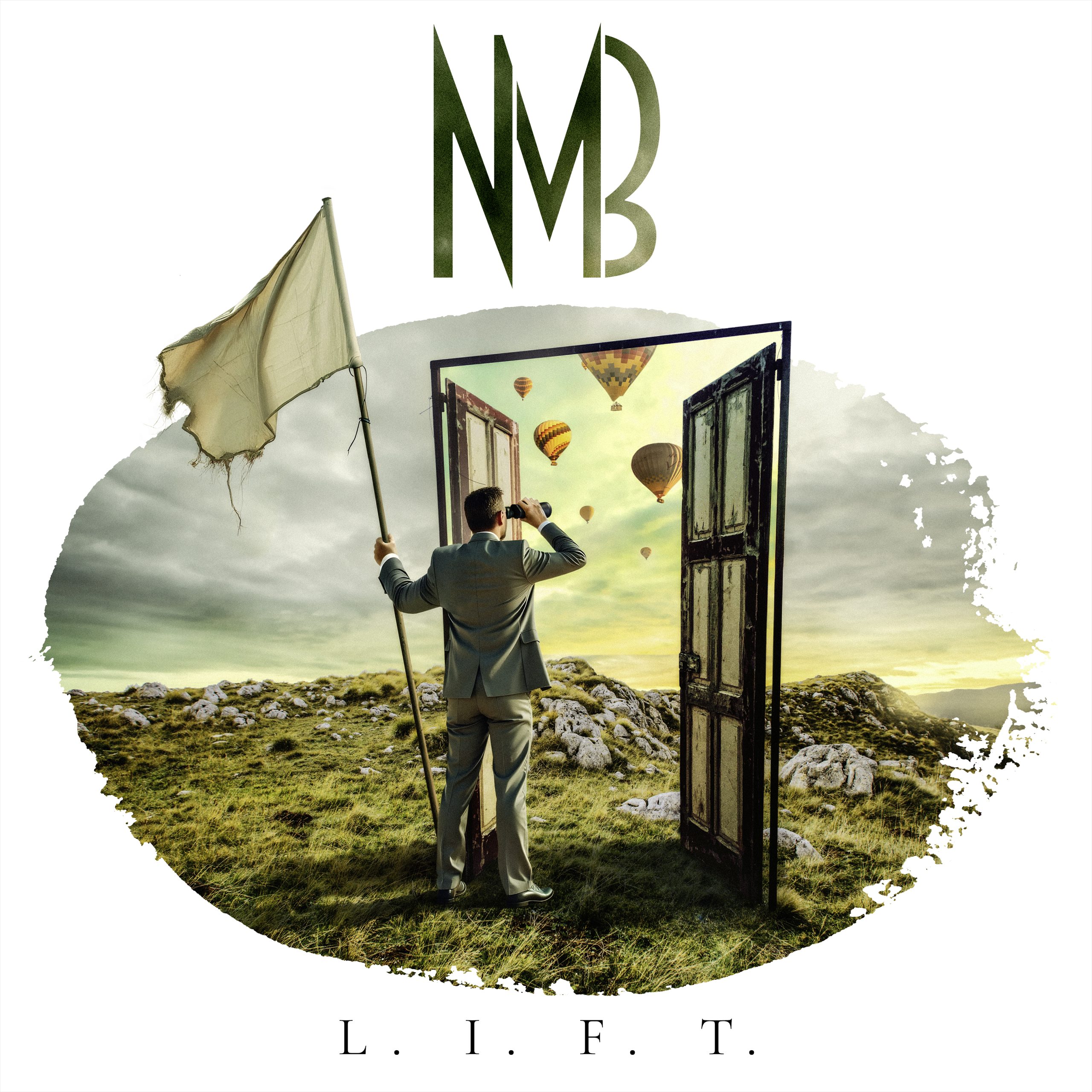
Over the course of their first 4 records, NMB, the Neal Morse Band, has redefined modern progressive rock and Randy George as held down the bass position for all of it. NMB has just released their 5th record, L.I.F.T. and once again raise the bar not only in musicianship but storytelling as well. Randy George recently took some time to talk about the record and so much more.
Please press the PLAY icon below for the MisplacedStraws Randy George interview –
On if the band was surprised to do another record with Mike Portnoy – We were certainly happy that time came. We knew all along, nothing ever changed for the Neal Morse Band. Mike first told us he was in talks with Dream Theater about rejoining and we’re all like, “Okay we’ll probably have to work around that”. Then a few months later he told us that it’s gonna happen. We knew that it would be a sensitive rejoining of the band that he just needed to give a hundred percent to. Nothing changed. We just knew it would be a time until the opportunity came. So, when it did, I was certainly very happy. We were all thrilled that we could do it and get it in because that’s how it’s gonna have to be for a while. Just find the opportunities, do what we can when we can. That’s just the rigors of the situation.
On the album title L.I.F.T. – Finding a name for this album was extremely tough. I think it’s certainly a matter of opinion, but we went through. 50, 60 possibilities. We were looking it up left or right. We were throwing different descriptions of the album to Chat GPT to see what it would come up with. It was just ridiculous. It was coming up with all these one-word names. Neal really wanted it to be a one-word title. I think after literally months of emails and texts and throwing lists of possibilities back and forth, I don’t know, Neal just, I think we just got tired of dealing with it. We just got to that point where you don’t care anymore. Neal came up with this, “Hey guys, I had this idea. What about L.I.F.T. But spell it as an acronym.” I forget the description, the four words he used when he threw it out there. It was funny. He wasn’t saying it should be that, he was just saying something like this, and it was just funny. We just decided it would be left open-ended and we wouldn’t really pin it down to any particular set of words. It can be whatever you want it to be, that was the whole idea. I can certainly give you ones that I’ve thought of that are just funny, but the people will come up with their own. I just always like to say it is Life In Fun Times, so that was always my joke about it.
On each NMB record meaning something different to each listener – That’s exactly what we wanted to happen. At least halfway. Then, the other half is what actually did happen. That’s what every album is, a combination of what you go in prepared to do and what you actually end up doing.
On if they went into this record with a story in mind – We didn’t really go in with a plan other than to just get together and see what happens. Now, of course, Bill (Hubauer) and I, and, sometimes Eric (Gillette) will put together little demo snippets of ideas and things that could be used, like building blocks to things. We find that has always worked best in terms of Neal and Mike and engaging in it. Then we build off of those kind of things. But that’s just strictly musical. The other side of it was we went in and we knew we wanted to make it a concept album and try to keep it to one cd. So, we definitely spent a little time thinking about, what the concept would be. Neal put together an outline one night, and I guess he got inspired. He outlined the concept in terms of a little paragraph describing what’s happening in each song to take you through the story arc. Writing to that made a big difference because now you have a target in mind and that way you know how to shape the music.
On the chemistry that the NMB members have with each other – We all speak the same language. I’ve learned that when you’re doing progressive music, you have every instrument filling a small bit of space, and it adds up. Bass is very busy, drums are very busy. Not everybody can find a song in all of that. Neal is one of those people who can, he can find a song or Bill or Eric, we’re those kind of musicians. I guess we’re all those kind of musicians where we can always find, find the song in an idea or find an idea in the song that you can build off of. We all see from different perspectives. Each guy’s focused on his instrument, but each guy’s brain understands what all the instruments are doing and where they’re coming from. It helps to, again, it helps to shape the music when you can discuss things in ideas like “Oh yeah, the bass, you should do this through this section on the bass. Try this kind of pattern or really max it out right here”, or different descriptions that someone else who wrote the piece or seems to be driving the piece at the moment. They’ll have ideas for everybody. Then we also respond back and forth same way. “Where should we go next?” I’d be like, “Oh, I think next this needs to be like Bill’s severance theme. But we need to rock it out and do it real heavy. Maybe do the guitar solo right there” and that kind of thing. It’s like you got all your building blocks on the floor, like a bunch of kids sitting around on the floor playing with building blocks. Each guy’s kind of building their own bit, but somehow, you’re all building something together. I was like, “Hey, I got a piece for this”, and you end up building a song. It’s just how you do it.
On always finding a song through the parts – Neal’s an exceptionally gifted songwriter. There’s something in the symmetry of what he does that people connect with on an emotional level, the term I’ve heard over the years more than anything is “healing”. There’s a lot of healing in Neal’s music. if that’s not your thing, it’s not your thing, it’s all about whoever shall hear, listen and you’ll hear, and whoever shall hear.
On the difference between recording an NMB record and a Neal Morse solo record – If I use the same analogy I did with the building blocks I think the big difference was most of the time we were all working on Neal’s building blocks rather than a combination of different things that you can contribute to because you have that freedom with regard to what you’re trying to build. Neal sat and did all that. First, what Mike and I brought to it was from more of a producer’s standpoint. “Oh, I hear it like this, or, what about putting this here? I think this should be later in the album or, we still don’t really have a good intro here”. So, then we might write that on the spot, like we did that in One, the intro to “The Creation”. We wrote right on the spot because. What he originally had wasn’t didn’t seem like the right thing. Ultimately all the way up to where the vocals start, we improvised all of that on “The Creation”. That’s an example. Then, a lot of that were pieces that I brought from my demos and like, where Phil Keaggy does his solo was over a section that I had on a demo. We’ve contributed bits and pieces. I wrote a bunch of lyrics on One, but that’s because of the proximity I had at the time because Neal was still building his demos and working on guitar, and he gave me his lyric notebook, and I was trying to fill in the blanks as we were going.
I was just throwing out ideas, but he seemed to really connect with them himself. So, I ended up writing a bunch of stuff on One. But, subsequently as it goes, like with ?, he had already laid out the whole thing, we just come in and didn’t really find that it needed a lot. I think I wrote one little passage toward just before “The Temple of the Living God” to get him from one key to another. We were struggling with the transition, and I came up with an idea that worked and we used it. So that’s the big difference. From The Grand Experiment forward versus everything before that he and I collaborated later on, like on Momentum on “Thoughts (part 5)”, for instance, with stuff we both threw into the mix that we had. It was true collaboration that was beginning to happen more at that point. Then we got Bill and Eric and moved, kept going.
On if there will be an NMB tour – Oh yeah. We’re trying to figure out the window of opportunity. But I think it’s pretty likely that it’ll happen this year. It may be later, but we’re still trying to figure out how we’re gonna do it. Then there’s MorseFest, he is gonna want to do it at Morsefest. There’s that and it’s just a lot of pre-planning. We haven’t solidified anything at this point, it’s an ongoing process, but I think that there’s a likelihood because that’s why we’re doing this. We have a process because we want to make it happen.
On if he grew up listening to progressive music – Oh no. I grew up, listening to music probably as early as 1967, 68, and “Strawberry Fields Forever”. The Beatles, there were records in the house, Beatles, Beach Boys, Loving Spoonful, Rolling Stones from my siblings, that were somewhat older than me. I heard that kind of stuff. Then my sister, who was the closest age to me was really into like Bobby Sherman and David Cassidy. So, I got endless amounts of that. Donny Osmond. Oh my God. It was funny I think it was when I heard “A Question” by the Moody Blues was like my first real connection to anything progressive rock. I had to have that record and I got it and I started listening to the Moody Blues.
Then there was of course “Roundabout”, which I’d hear on the radio. Every time that came on, I just had a natural…I just gravitated naturally to those sounds and that music it wasn’t an effort to do it. It just what really attracted me. I don’t know why. It just was natural, so I followed that. Then, Kansas came out, Queen came out, Styx was doing their stuff. Equinox was a fantastic album. I love that album. I just grew up through the thick of it all and then ultimately Genesis as well as Steve Hackett. So, I got discovered both Genesis and Steve Hackett, like Voyage of the Acolyte at the same time. Seconds Out and Voyage of the Acolyte were two records that a friend of mine kept turning me onto, so I got into those and then I along came Brand X, Bill Bruford Band, and meanwhile, Yes and The Moody Blues were still doing their thing or whatever. Then Rush, there’s Rush in the mix.
As the eighties went on, it was into a lot of the eighties stuff like Missing Persons and Level 42 and then, Yes, Genesis Rush all just kinda ruled in the eighties and got to see all those great shows and that just, that was what I gravitated towards as I got older. I started appreciating a lot more of the Deep Purple and Alice Cooper and more of the hard rock that I didn’t listen to that much in the eighties. Even some of Stevie Ray, Vaughn, Joe Bonamassa kind of stuff. Which back then, see, as a kid, I would’ve never wanted to listen to that. I wouldn’t, I just didn’t interest me. I didn’t hate it. I just, I hear Moody Blues or, Yes and I was like, “Oh yeah, this, that’s my thing”. So yeah, that’s where it came from.
On any other upcoming plans – No, I’m going to London in a couple of weeks for MorseFest and taking my wife, so making a London vacation out of it. No, other than that, I’m booked solid here in around where I live. I’m booked solid, at least all the way up into to June. June, July are always really slow months for gigs. Still manage to play a few times a month, but it slows way down. See, right now I’m booked, I’ve been booked solid every weekend, all the way through June, second week of June. Then of course, if the tour at some point takes off, there’ll be that.
